
External video
Open workflow reference
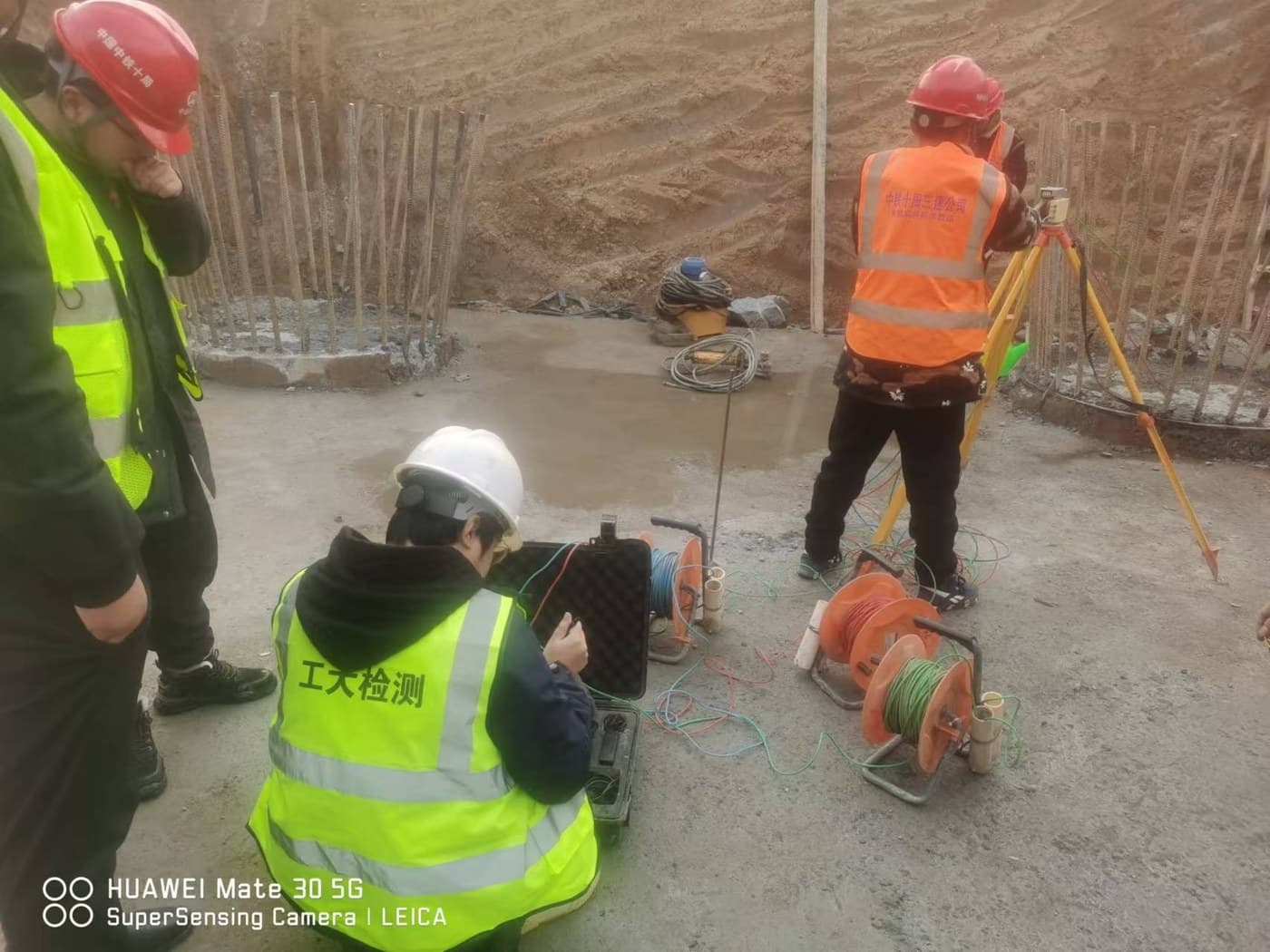
Pile integrity test setup
Visual reference for pile head preparation, sensor coupling, hammer impact, and quick signal review.
Open video referenceStandard Guide / China pile testing standards
For Chinese foundation-pile testing, JGJ 106-2014 is the central building-foundation testing reference publicly listed as current by China's National Digital Library of Standards, checked by An-Thai on 2026-07-15. Other current sector or method references include JGJ/T 403-2017 for self-balanced static loading, JTS 240-2020 for waterway engineering, JTG/T 3512-2020 for highway engineering, and TB 10218-2019 for railway piles. They are not interchangeable with ASTM, ISO, EN, or a destination project's specification.
Visual workflow
Buyers make faster decisions when the method, equipment, standard, data output, and RFQ scope are shown as a sequence.
Identify standard
Buy official edition
Map method
Select equipment
Document compliance
Video reference
Visual reference for pile head preparation, sensor coupling, hammer impact, and quick signal review.
Open video reference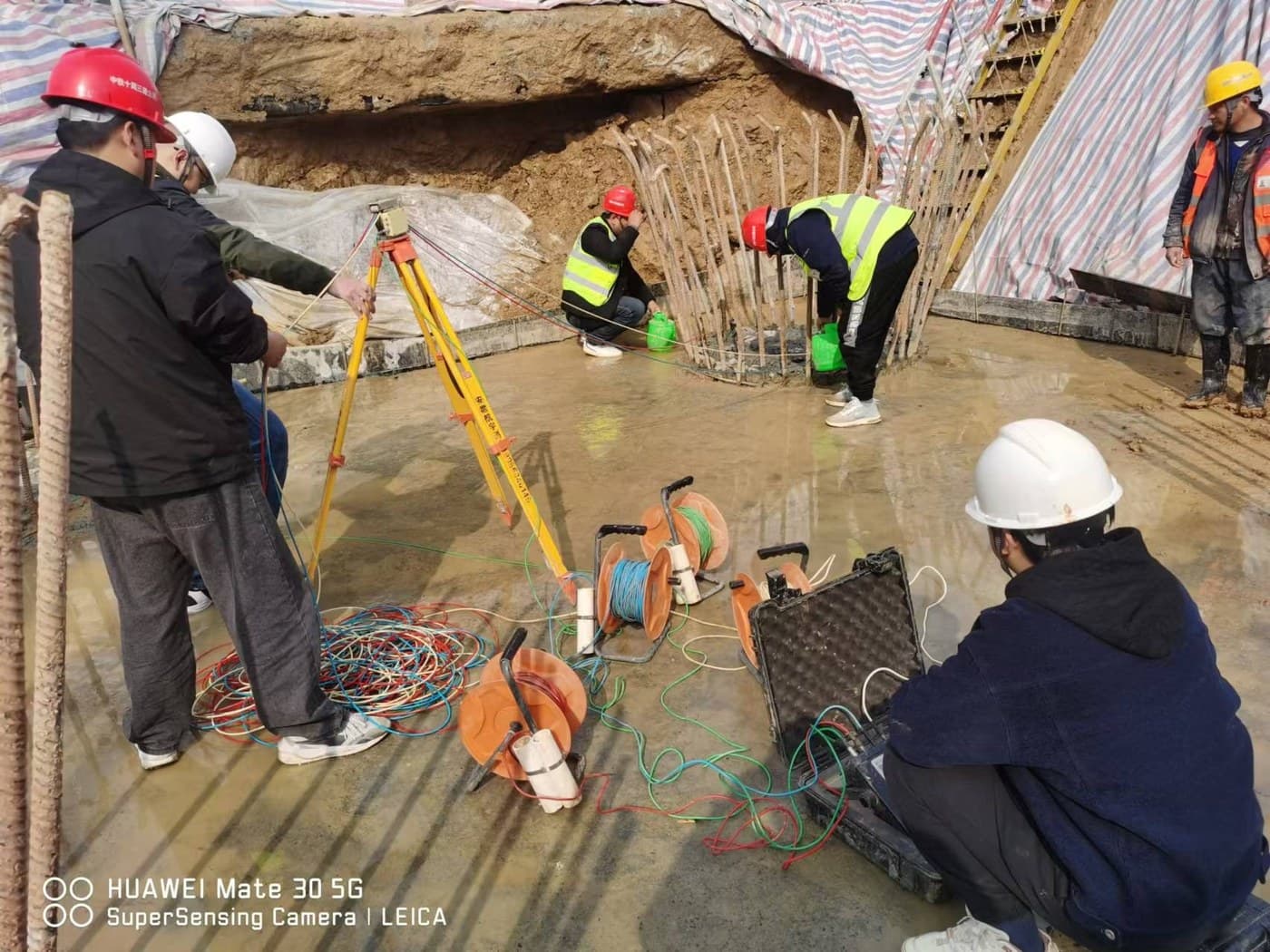
Shows why strain and acceleration channels, pile head preparation, and trace review matter.
Open video referenceVersion status was checked against the National Digital Library of Standards on 2026-07-15. It lists JGJ 106-2014 as current for testing and evaluation of bearing capacity and integrity of building foundation piles; JGJ/T 403-2017 for self-balanced static loading; JTS 240-2020 for waterway engineering piles; JTG/T 3512-2020 for highway engineering piles; and TB 10218-2019 for railway piles. GB and GB/T references can also apply to materials, instrumentation, metrology, safety, or reporting, but no broad GB code should be claimed as a substitute for the project method. Obtain the official project-specified text before use.
The Chinese code family contains method-specific and sector-specific requirements. Low-strain, high-strain, acoustic, static, self-balanced, and other methods must be selected around the foundation type and project objective, not around an available instrument.
For overseas work, equipment should retain raw readings and calibration evidence, support agreed units and report labels, and allow the technical team to explain differences between Chinese workflows and the governing local or international project requirement.
A Chinese-manufactured system can be a strong field tool when it is supported by a documented method statement, ITP, calibration records, data export, sample English report, and review of how those outputs fit the authority or consultant's required workflow.
Separate three questions in every RFQ: what the instrument can measure; which Chinese method or code the supplier uses; and what the destination project requires for acceptance. An-Thai can coordinate this standards map and report adaptation before equipment is shipped.
Use the National Digital Library of Standards listing to verify public status; obtain the official text through the appropriate authorized channel.
Official publisher sourceUse cross-standard mapping as a gap-analysis tool, not as an equivalence statement. A project may reference ASTM D4945 for high-strain dynamic testing, historic ASTM D5882 or D6760 references for low-strain and ultrasonic crosshole work, ISO/EN documents for field-investigation or quality-system context, and a Chinese JGJ/JTG/JTS/TB method for the supplied equipment's native workflow. The technical team must compare scope, test object, loading or measurement sequence, sensor placement, calibration traceability, units, calculation assumptions, acceptance language, and report content. A shared test name does not prove interchangeable compliance.
For an overseas deployment, prepare a crosswalk table with one row per project requirement: contract clause, governing document and edition, expected field record, instrument channel or accessory, native-data file, report section, responsible party, and evidence of completion. This is the practical bridge between a Chinese-manufactured instrument and a consultant-facing English report. An-Thai can scope that table as part of the RFQ before shipment.
| Option | Guidance | Buyer note |
|---|---|---|
| JGJ 106-2014 | Building foundation pile testing and evaluation reference. | Confirm edition and local amendments in the contract. |
| JGJ/T 403-2017 | Self-balanced static loading technical specification. | Use for projects adopting the self-balanced method. |
| JTS 240-2020 / JTG/T 3512-2020 | Waterway and highway sector references respectively. | Sector-specific requirements can change the test and report scope. |
| TB 10218-2019 | Railway engineering pile testing and assessment reference. | Use for railway projects; do not substitute a building-sector method without approval. |
| ASTM / ISO / EN crosswalk | A documented comparison of scope, field procedure, data, and report requirements. | Mapping is not a declaration that two standards are equivalent. |
Equipment Product
Equipment Product
Equipment Product
Equipment Product
Testing Method
Testing Method
Testing Method
Testing Method
Possibly, but not by relabelling it. The project engineer must map method scope, sensors, calibration, loading schedule, data processing, units, traceability, and report headings to the governing requirement.
Name the project sector and method first, then the code edition required by the contract. Do not use a broad China-standard label as a substitute for a test plan.