

Low-strain PIT package
The useful buyer question is not only the tester model, but hammer, sensor, coupling, software, training, and reporting workflow.
Project library
An-Thai turns authorized project files, field photos, instrument materials, and training references into buyer-ready English guidance for pile testing, soil investigation, concrete inspection, and RFQ equipment packages.
Field-first library
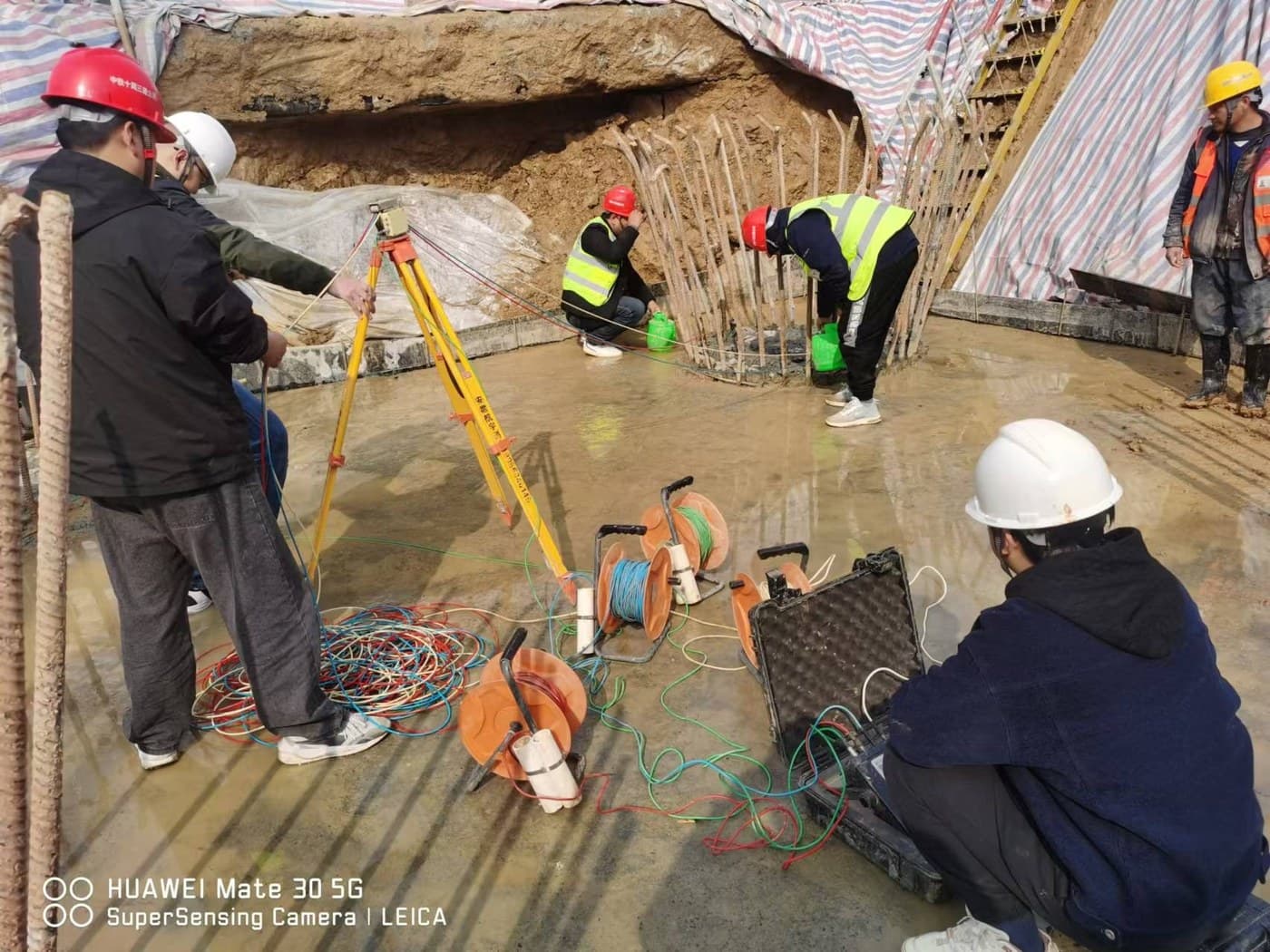
Sensor installation, cable routing, hammer energy, and signal quality are visible in the same field scene.
The useful buyer question is not only the tester model, but hammer, sensor, coupling, software, training, and reporting workflow.

Load cell capacity, welded cage integration, hydraulic pressure control, displacement measurement, and equivalent curve reporting must be specified together.
Video references
These public videos are used as visual references for buyers and engineers. RFQ and technical follow-up stay through An-Thai.
Pile Dynamics, Inc.
Good visual reference for high-strain dynamic pile testing concepts and signal flow.
Open video reference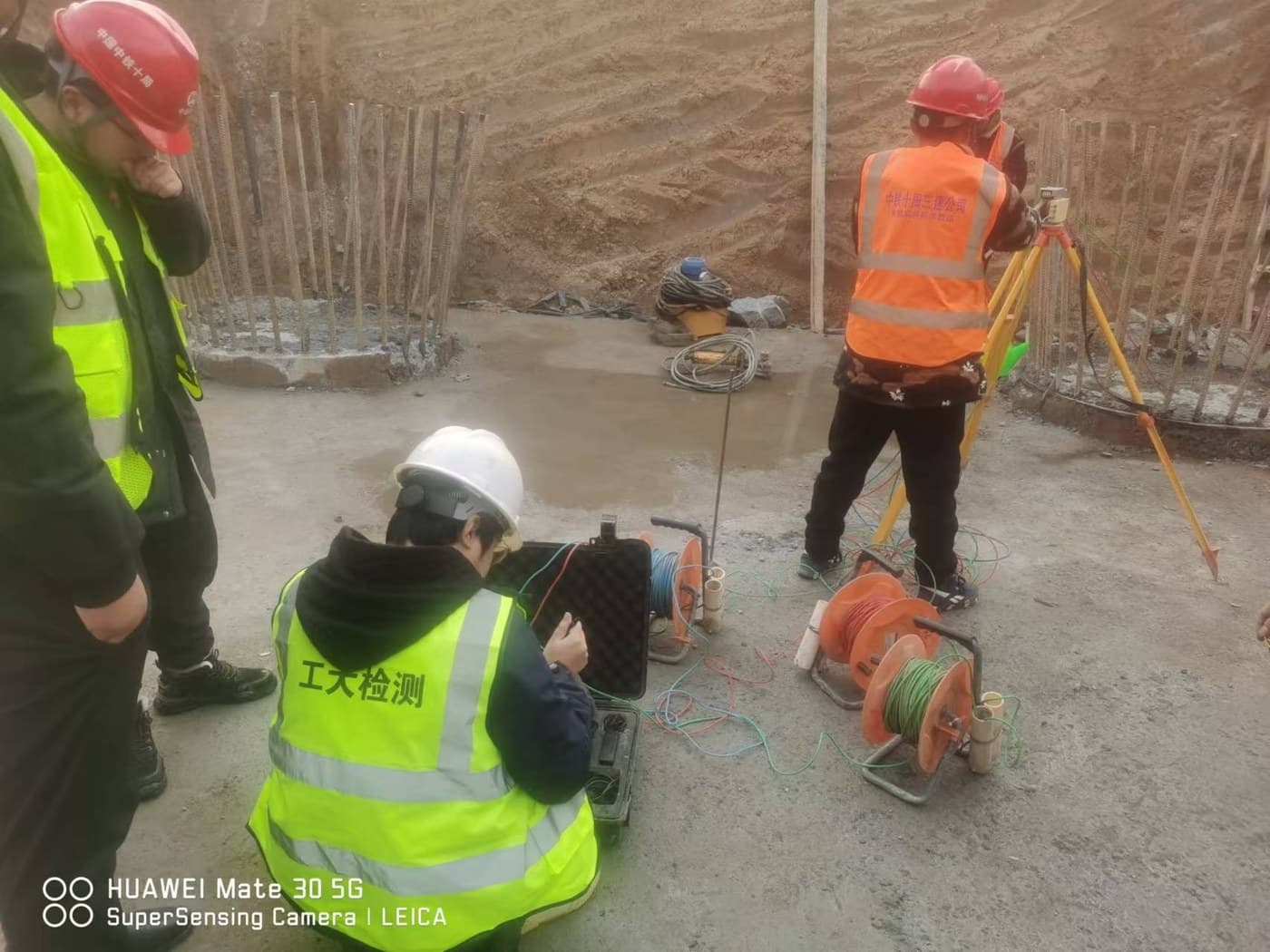
Pile Dynamics, Inc.
Short practical visual reference for low-strain pile integrity test setup.
Open video referenceGRL Engineers, Inc.
Useful for explaining reaction, load application, and settlement measurement to buyers.
Open video reference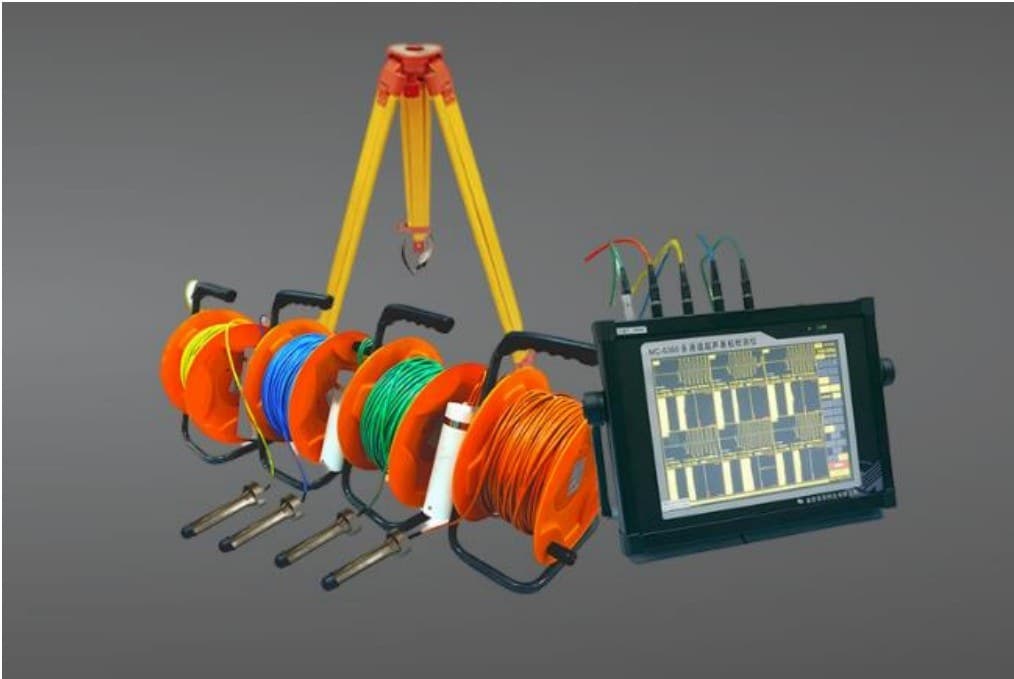
GRL Engineers, Inc.
Helpful reference for CSL access tubes, probes, and defect detection workflow.
Open video referencePublic field reference
Field visual reference for soil investigation context before foundation testing.
Open video referenceMethod playbooks
Each method page follows the same buyer logic: what the test proves, what it cannot prove, what package is needed, what data must be checked, and what a buyer should request before purchase.

Capacity confirmation
A static load test is still the most direct way to demonstrate pile load-settlement behavior. The engineering value comes from stable reaction, reliable displacement reference, controlled loading increments, and clean data logging.
Bidirectional load cell capacity proof
Bidirectional testing uses an embedded load cell to separate upward shaft resistance from downward toe or lower shaft resistance. It is useful where kentledge or anchor reactions are difficult, but the load cell, cage integration, grouting, cables, and equivalent curve interpretation need careful planning.
Fast field capacity and driving response
High-strain dynamic testing is useful when projects need rapid capacity evidence during driving or re-strike. The tester is only one part of the package; pile head preparation and signal quality decide whether the data is useful.

Rapid integrity screening
Low-strain PIT is a screening method for piles where the top is accessible. It is fast and economical, but it depends on pile head preparation, proper impact energy, sensor coupling, and engineering interpretation.
Deep drilled shaft integrity
CSL is selected when drilled shafts or barrettes need internal concrete quality checks through access tubes. The practical risk is not only the instrument; tube installation, water filling, and probe travel control matter just as much.
Ground model input
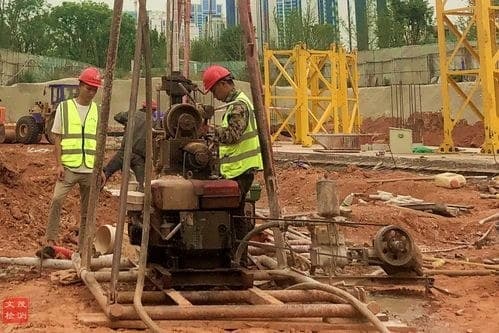
Soil investigation images help buyers understand the upstream data behind foundation testing. SPT tools, sampling, borehole logs, and groundwater notes influence which pile test method and instrument package is appropriate.
Field media gallery
The library now supports visual browsing by site condition, method, and equipment package. More authorized project images can be added without changing the page architecture.




Engineering decision matrix
The point of the library is to convert field evidence into practical selection advice. Buyers should see the method, required package, and report output before they compare brands or prices.
| Method | Best use | Critical package items | Output to review |
|---|---|---|---|
| Static load test | Direct proof testing for working piles, trial piles, and acceptance programs where settlement behavior matters. | Hydraulic jack, reaction system, calibrated pressure measurement, displacement gauges, reference beam, data logger. | Load-settlement table, load-settlement curve, residual settlement, hold-time records, acceptance notes. |
| Bidirectional O-cell static load test | Capacity proof where conventional reaction systems are difficult or where separated upper and lower resistance is valuable. | Embedded O-cell or load box, hydraulic pump, pressure transducer, displacement sensors, protected cables, DAQ, calibration records. | Upper and lower load-displacement curves, equivalent top-load conversion, pressure records, displacement records, interpretation limits. |
| High-strain dynamic load test | Fast capacity and driving response checks for driven piles or re-strike testing where hammer energy is available. | Dynamic analyzer, strain sensors, accelerometers, mounting hardware, cables, hammer energy record, analysis software. | Force-time and velocity-time curves, transferred energy, stress, field capacity estimate, integrity observations. |
| Low-strain integrity test | Rapid screening of accessible piles for major impedance changes, length reflection, or suspected integrity issues. | PIT unit, accelerometer or velocity sensor, impact hammer set, coupling material, field review software. | Velocity response curve, toe reflection confidence, suspected necking, bulging, void, or soil resistance effects. |
| Crosshole sonic logging | Integrity assessment for drilled shafts, barrettes, or deep foundations with embedded access tubes. | CSL acquisition unit, transmitter and receiver probes, depth encoder, water-filled tubes, tube access plan. | Depth-based arrival time, signal energy, tube-pair profiles, anomaly zones, recommendations for coring or review. |
| SPT and borehole investigation | Ground model development before selecting foundation type, pile length, load range, and test package. | Drilling rig, SPT hammer and sampler, casing, sample boxes, borehole logging template, groundwater measurement. | Borehole logs, SPT-N values, soil descriptions, groundwater record, design and testing input. |
Organized material base
The library is a curated technical base for English product pages, buyer guides, training notes, RFQ checklists, and project-specific equipment recommendations.
English-facing guidance distilled from static load, dynamic load, crosshole sonic logging, and low-strain integrity testing material used in real foundation workflows.
RFQ-ready package references for static load acquisition, wireless displacement sensors, pressure transmitters, hydraulic jacks, low-strain testers, high-strain testers, and CSL systems.
Controlled references for sensor calibration planning, acquisition channel checks, strain and acceleration sensor traceability, and practical acceptance before mobilization.
Operation videos, software screenshots, pile head preparation notes, site workflow diagrams, and report preparation examples for An-Thai technical support.
Curated report structures for borehole investigation, pile integrity, dynamic load, static load, crosshole sonic logging, and foundation acceptance packages.
Acquisition, analysis, reporting, dashboard, and later database migration references so the website can grow from library pages into a real technical data platform.
Source handling
An-Thai converts approved technical material into practical buyer guidance while keeping confidential commercial, personal, and project-sensitive information protected.