Testing & Inspection

FIELD DATA.
ENGINEERING JUDGEMENT.

AN-THAI provides practical testing and inspection support in Thailand from geotechnical investigation and pile testing through material and structural verification.

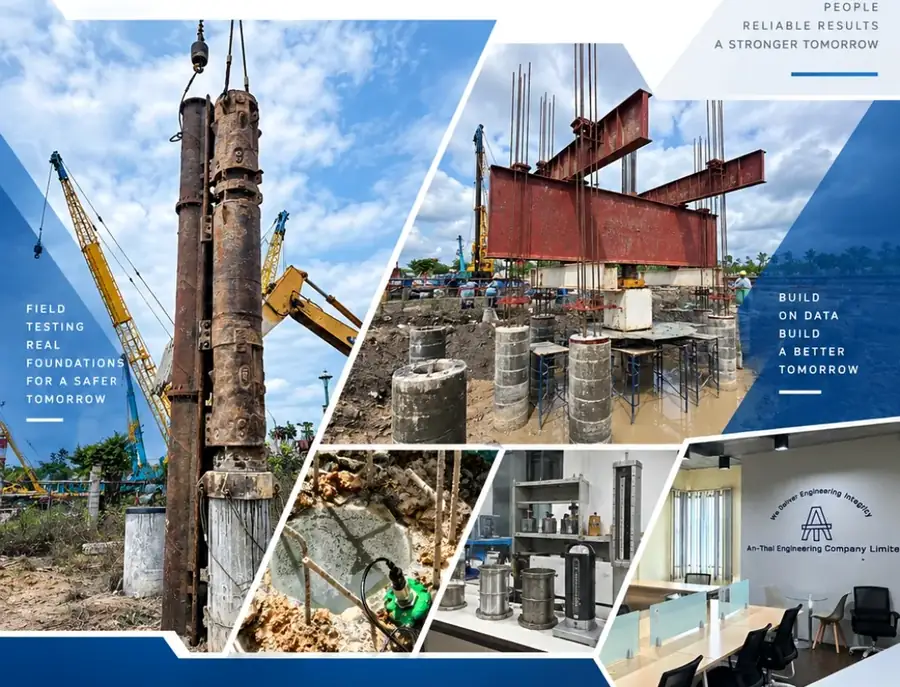
Pile-testing scenes from the AN-THAI engineering brochure
Pile Test Selection

Which pile test answers which question?

Start with the engineering decision, then confirm the project specification, pile type, site condition and acceptance criteria before fixing the test method.

Low-Strain Integrity Test

Use it to screen pile integrity quickly.

  • Useful for identifying reflected-wave anomalies that may indicate changes in pile continuity.
  • Requires a prepared, accessible pile head and a suitable impact/sensor location.
  • It does not by itself establish geotechnical bearing capacity.
  • Typical output: recorded signal, interpretation and agreed reporting notes.

High-Strain Dynamic Test

Use it when the project needs dynamic response and capacity-related evidence.

  • Measures force and velocity during impact and supports wave-equation based interpretation.
  • Requires an impact arrangement, accessible pile head and project-specific test setup.
  • Results depend on test conditions and the agreed interpretation method.
  • Typical output: field records, analysis results and engineering interpretation.

Static Load Test

Use it when the project needs direct load–settlement behavior under a controlled loading program.

  • Requires a defined loading direction, reaction system, instrumentation and safe working area.
  • Site preparation and reaction capacity must be resolved before mobilization.
  • The loading schedule and acceptance basis come from the project requirements.
  • Typical output: load/settlement records, curves and the agreed technical report.
Before requesting a quote: send the project location, pile type and size, design or test load, number of test points, available drawings/specification, target schedule and any site-access or reaction-system constraints. AN-THAI will confirm the testing route and required preparation before mobilization.
Pile Testing

Foundation performance & integrity

Testing methods are selected according to pile type, project objectives, loading requirements and available access.

Static Load Test

  • Reaction system setup and staged loading
  • Settlement measurement and load–settlement curve
  • Compression, uplift or lateral arrangements according to project requirements
  • Engineering interpretation and test report

High-Strain Dynamic Pile Test

  • Impact loading at pile head
  • Force and velocity measurement
  • Wave-equation based analysis
  • Capacity and integrity assessment

Low-Strain Integrity Test

  • Pile-head preparation and light hammer impact
  • Accelerometer signal collection
  • Reflected-wave interpretation
  • Rapid integrity screening and anomaly indication

Crosshole Sonic Logging (CSL)

  • For cast-in-place bored piles with pre-installed access tubes
  • Transmitter and receiver probes in water-filled tubes
  • Travel-time and signal-strength profiles
  • Anomaly zone identification and integrity interpretation

Test method, reaction capacity, access, specialist resources and reporting responsibilities are confirmed for each project before mobilisation.

Geotechnical & Field Testing

Understand the ground before the structure depends on it

Field and laboratory resources can be coordinated according to project scope and test requirements.

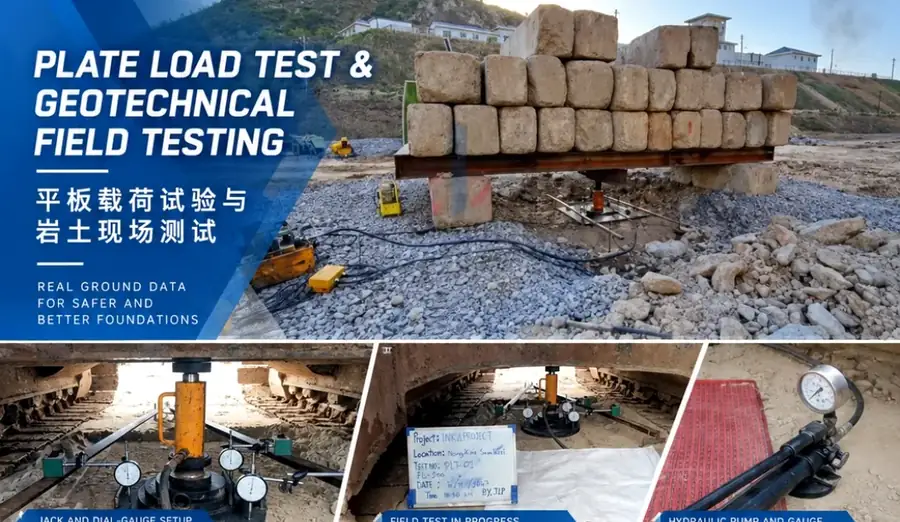
Plate load-test arrangements shown in the AN-THAI brochure

Plate Load Test

Evaluate subgrade or ground bearing behavior and deformation under applied load, supporting foundation design and construction control.

1
Set upReaction system, loading plate and instrumentation.
2
LoadApply load in controlled stages.
3
MeasureRecord settlement at each load stage.
4
EvaluateInterpret ground response and prepare report.

Geotechnical Investigation

Site investigation, borehole and sampling coordination, field measurements and laboratory testing to support assessment of soil and rock conditions. The investigation programme, responsible specialists and report scope are agreed for each project.

Discuss an investigation →
Material & Structural Testing

Partner laboratory network for broader test scope

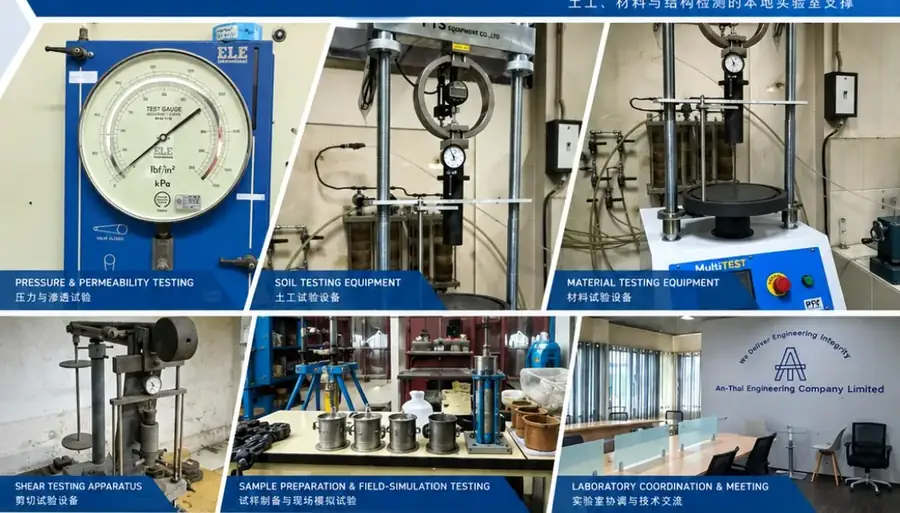
AN-THAI coordinates with local laboratories and engineering specialists selected for the project scope for soil, concrete, steel, material and structural testing requirements.

Soil Testing

Classification, compaction/CBR, permeability/consolidation and shear-strength testing.

Concrete & Materials

Concrete strength and construction-material testing support.

Structural / Specialized

Component testing, NDT and specialized tests according to project needs.

Technical Coordination

Method planning, review, result discussion and bilingual project coordination.

Laboratory instruments illustrated in the AN-THAI partner laboratory brochure section
Partner laboratory imagery · AN-THAI brochure
Testing Enquiry Guide

What should be confirmed before a testing quotation?

What information helps AN-THAI review a pile-testing enquiry?

Share the pile type, design/load target, number of test points, site location, schedule and available drawings or specifications. The appropriate method and scope are then confirmed for the project.

Can AN-THAI support both field testing and wider laboratory or specialist scope?

Yes. AN-THAI provides field-testing and inspection support and coordinates with local laboratories and engineering specialists when the agreed project scope requires broader testing.

What is included in a testing quotation?

The quotation should define the method, test quantity, site assumptions, deliverables, specialist responsibilities and any agreed technical coordination. Requirements vary by project.

Send us the test requirement.

Include pile type, design/load target, number of test points, project location and schedule where available.